Available Formats:
Truetype, Opentype, Woff,

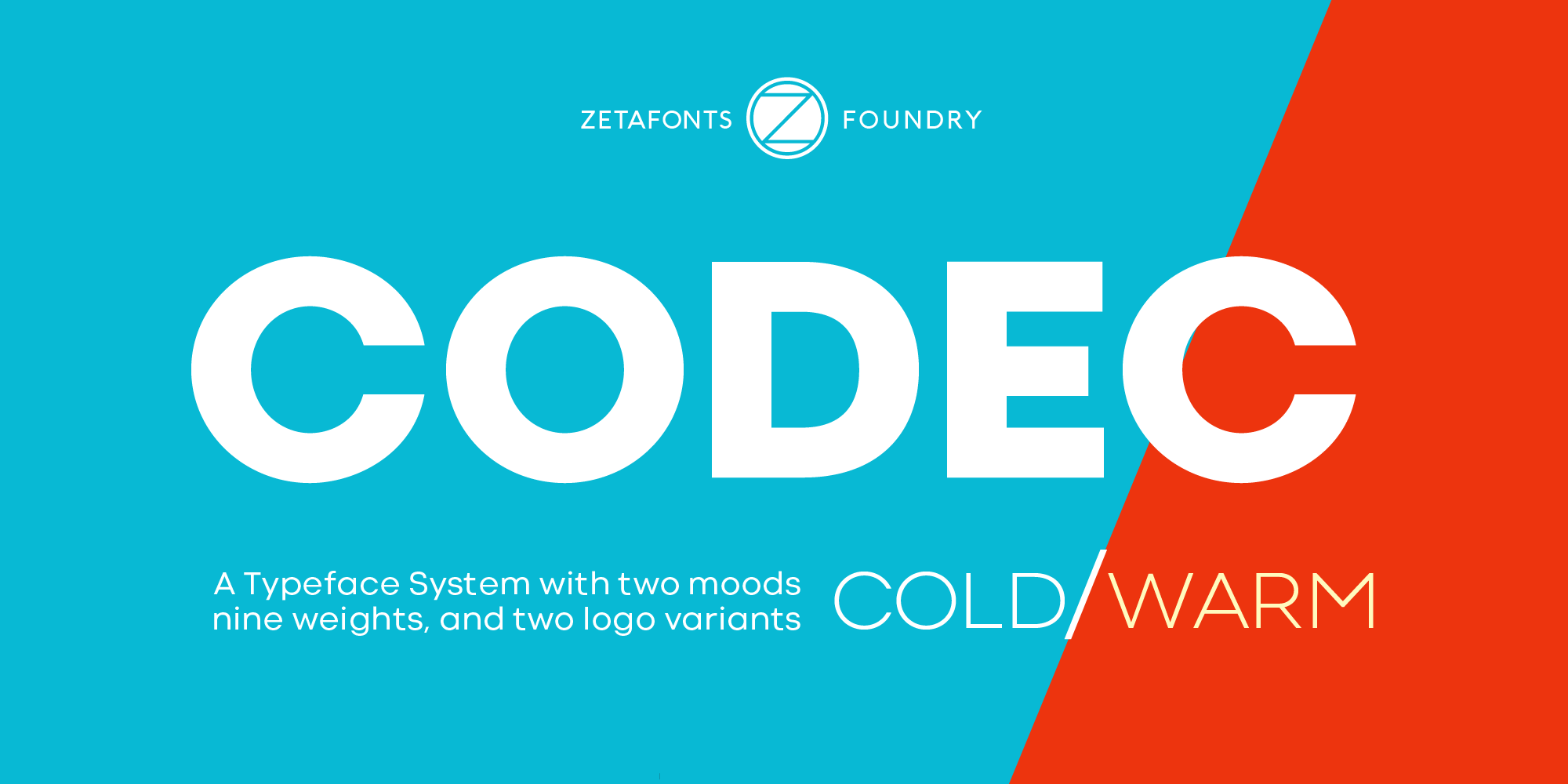
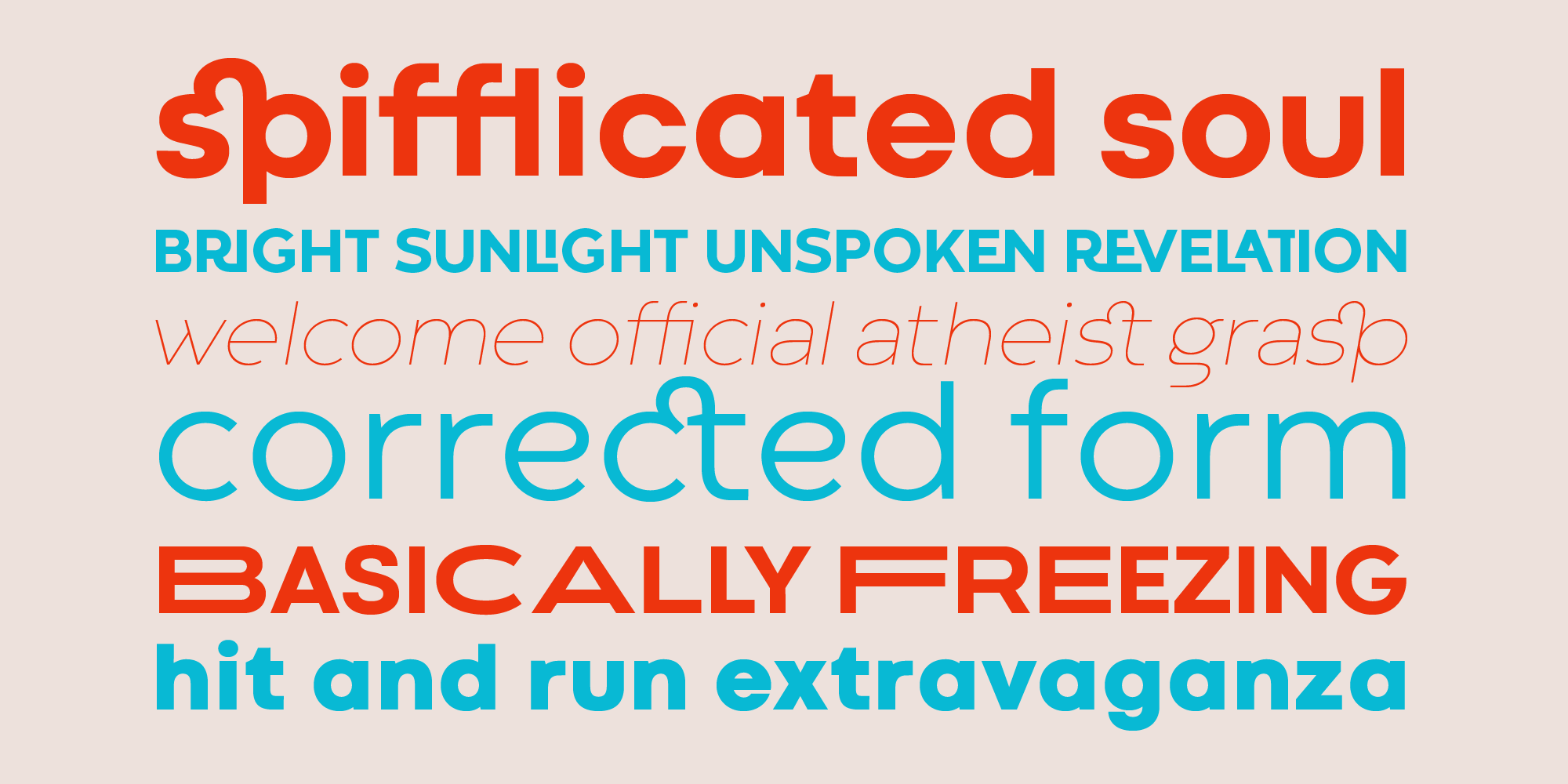
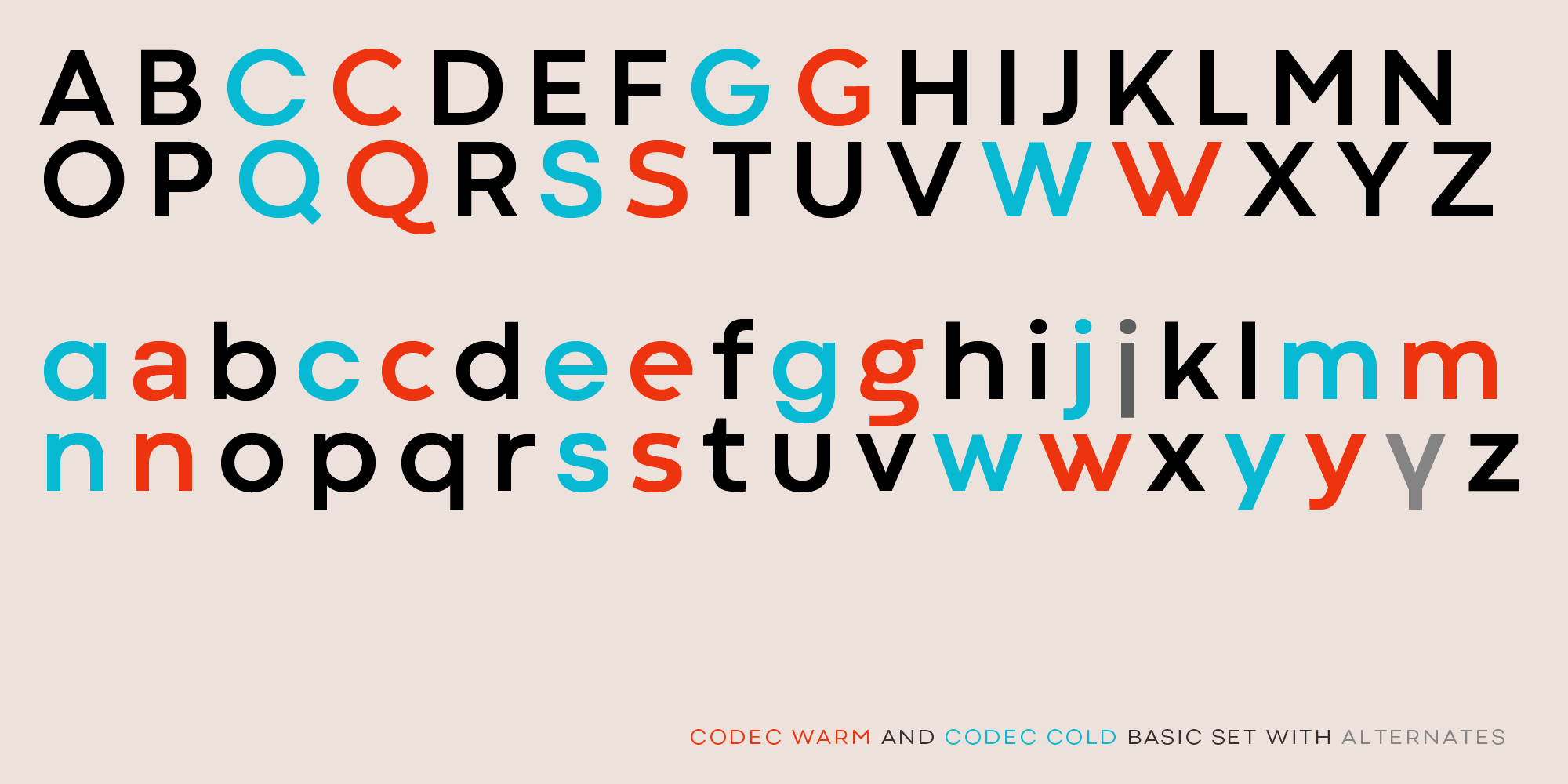
Codec is a geometric sans serif type system, designed by Cosimo Lorenzo Pancini with Francesco Canovaro and Andrea Tartarelli. As in many contemporary typefaces that take inspiration from the constructionist logic of Futura, design is defined by the small choices in the space between rigorous geometric perfection and minimal humanist corrections. But rather than solving this tension with a collection of arbitrary choices, Codec provides you with two coherent variant fonts built on the same base skeleton: Codec Cold and Codec Warm.
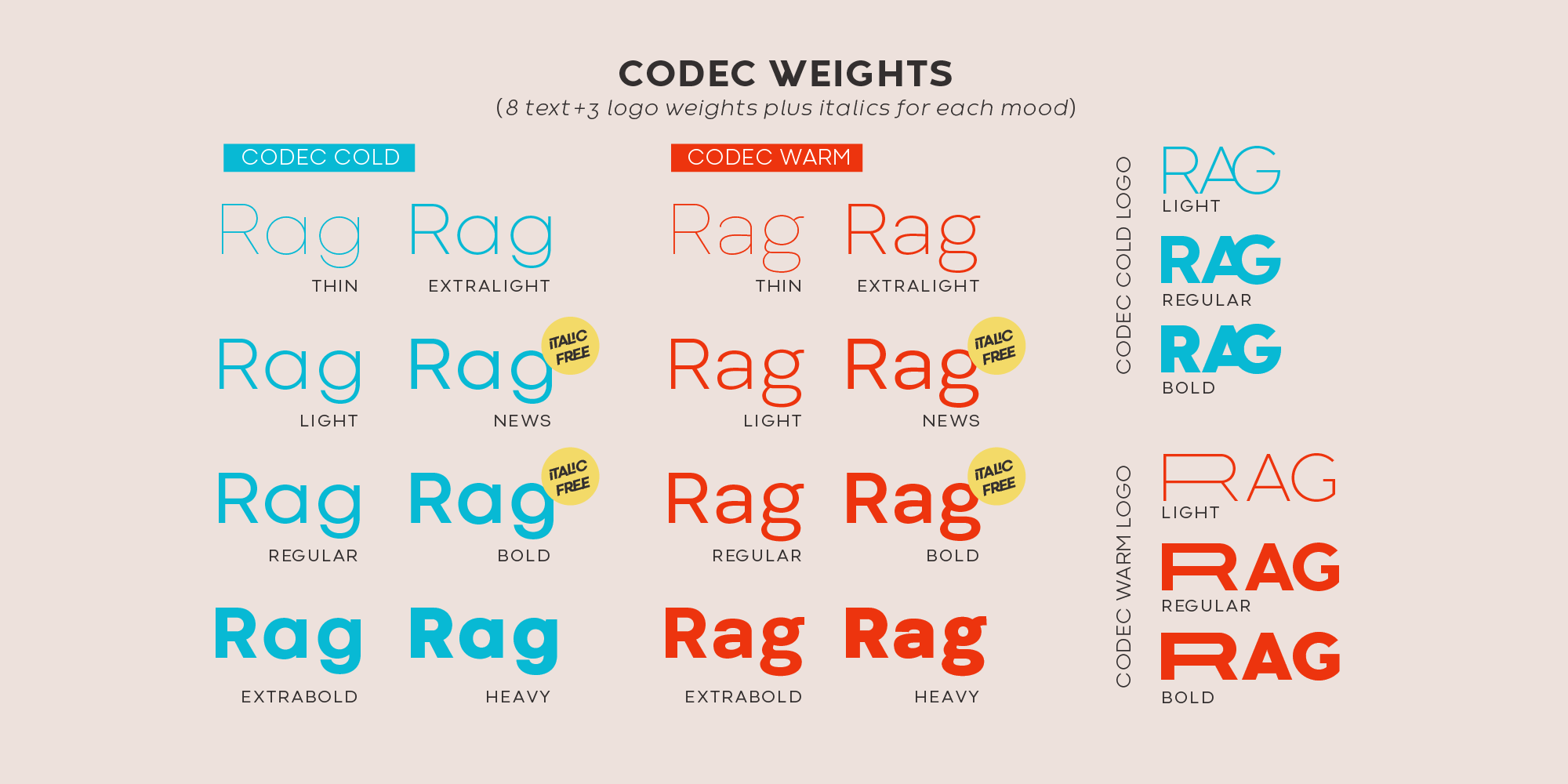
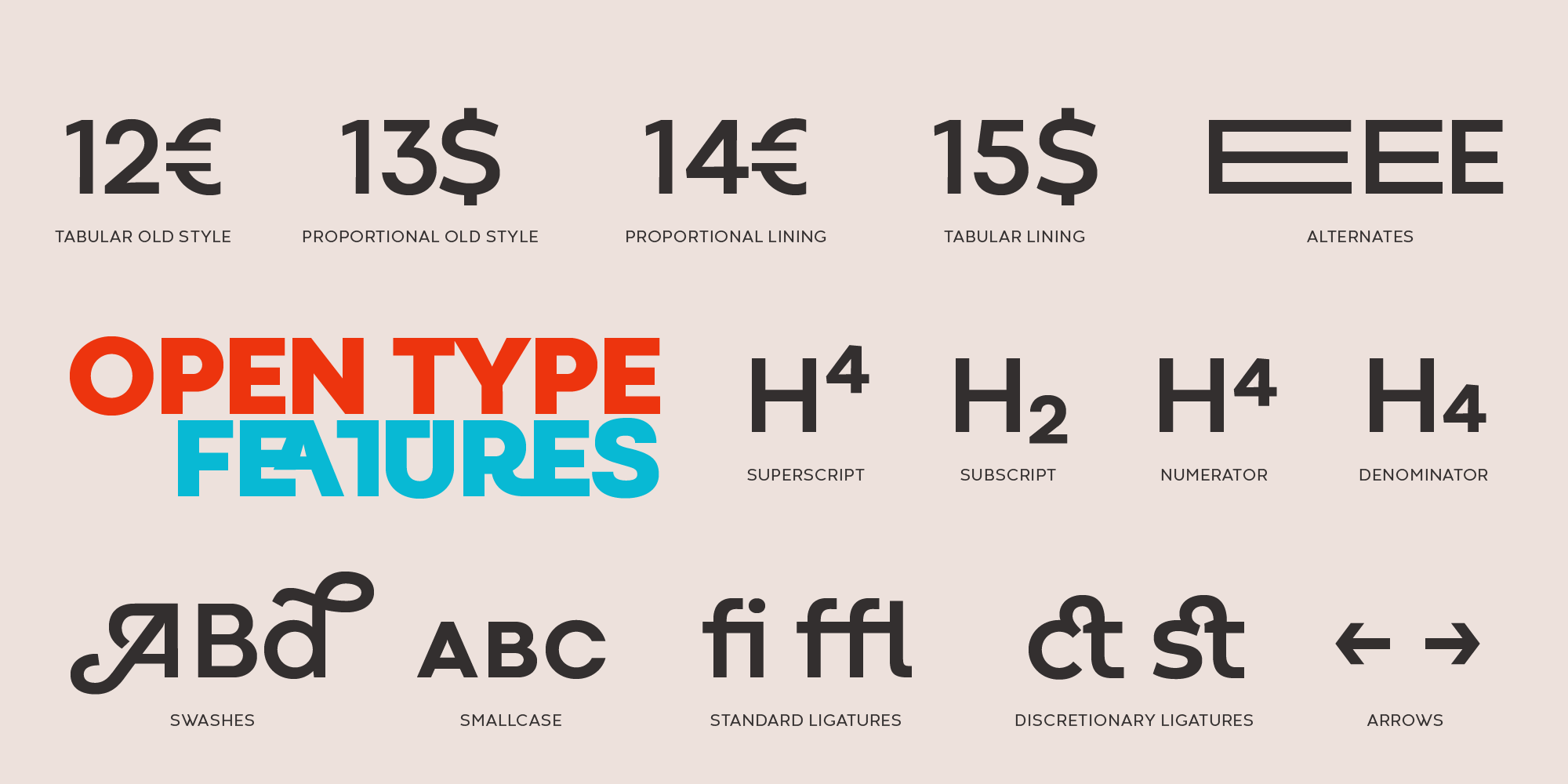
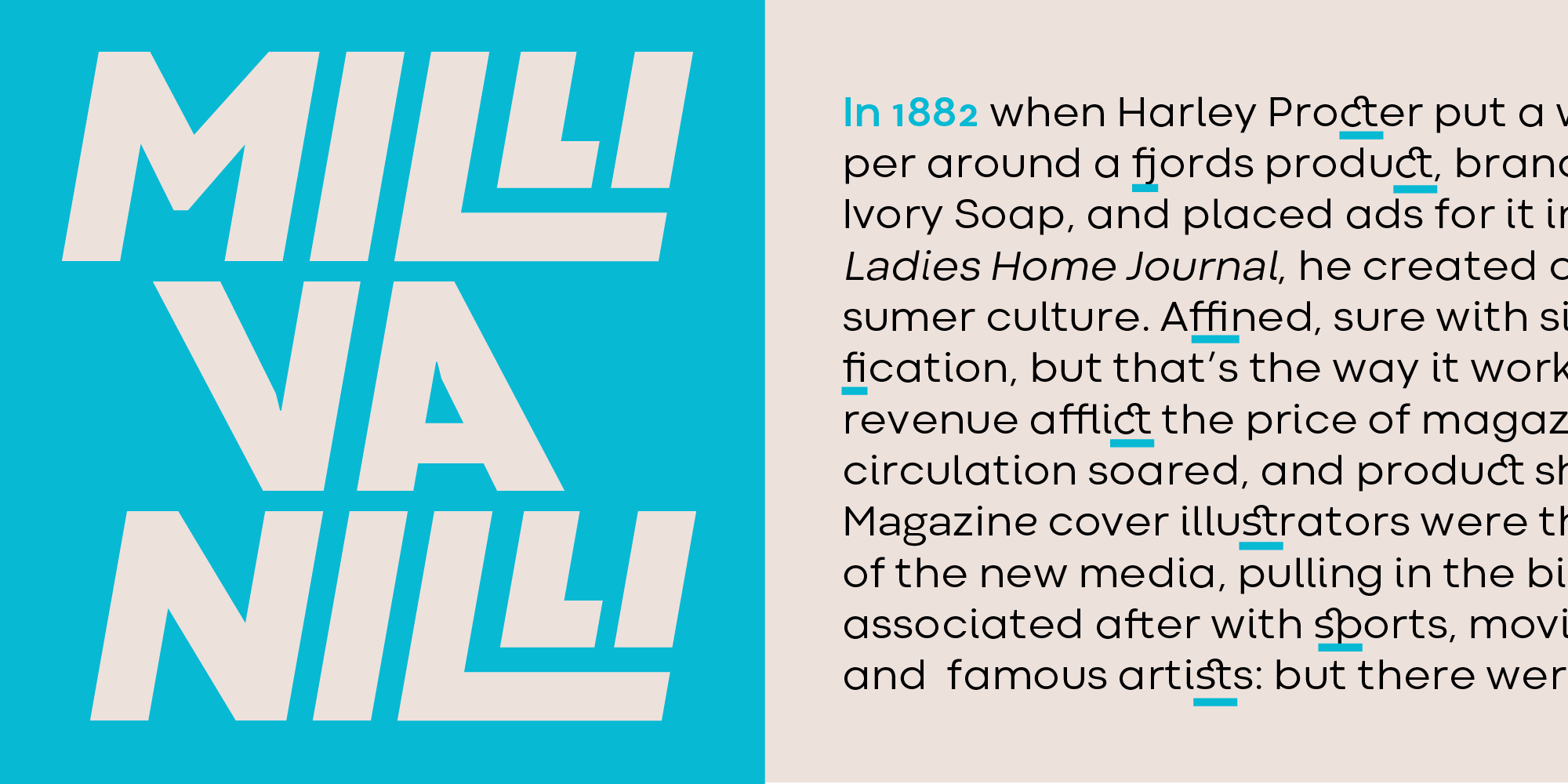
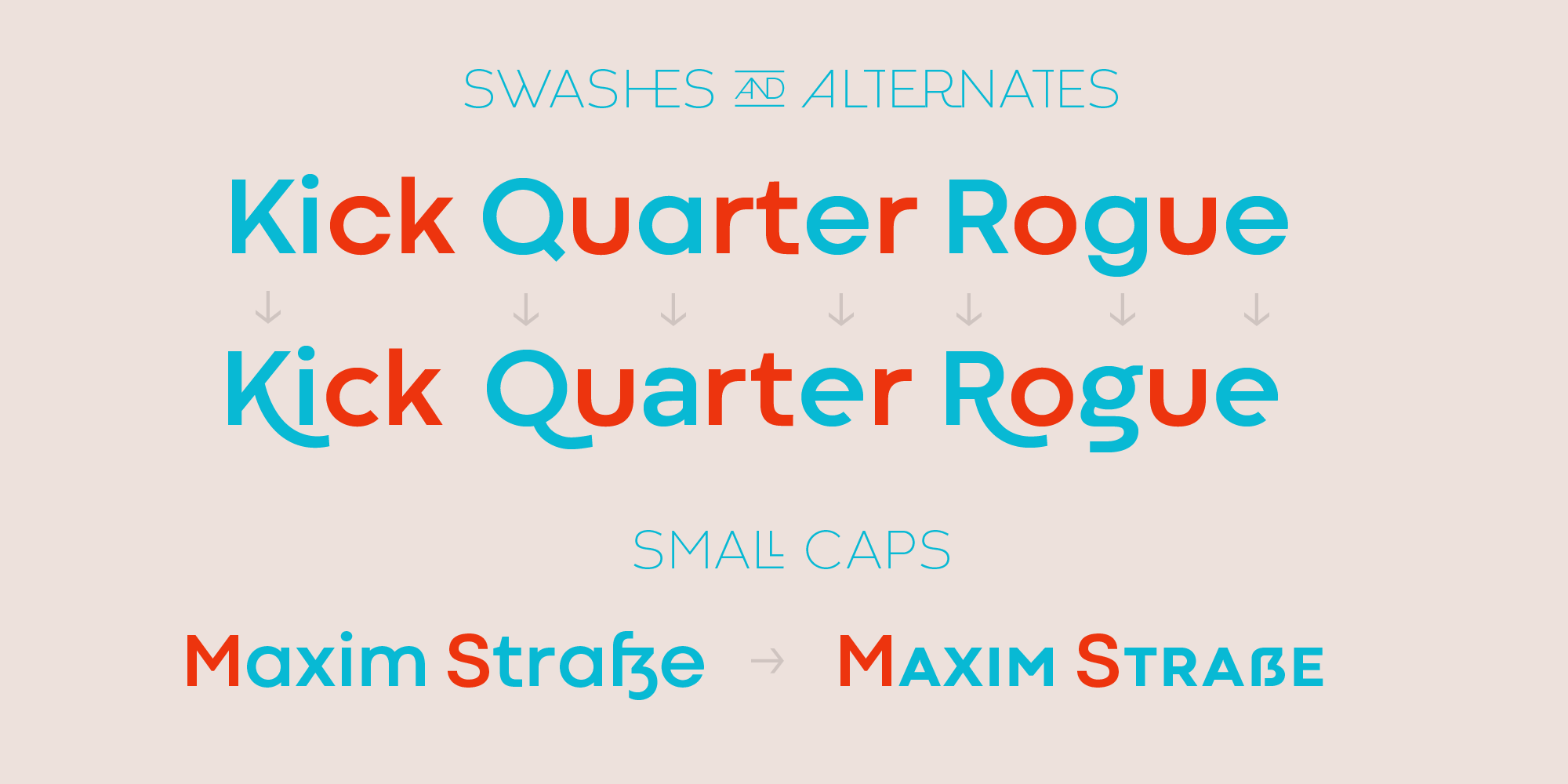
In Codec Cold terminals are always cut parallel or perpendicular to the baseline, emphasizing geometry and giving the typeface a more constructed look. In Codec Warm, on the contrary, open diagonal cuts and two-storey letterforms give the typeface a slightly more humanist look and a gentler, warmer text feeling. Both Codec Cold and Codec Warm come with a wide range of glyphs for language coverage, including cyrillic and greek alphabets, and of open type features, including small caps, positional numerals and swash forms.
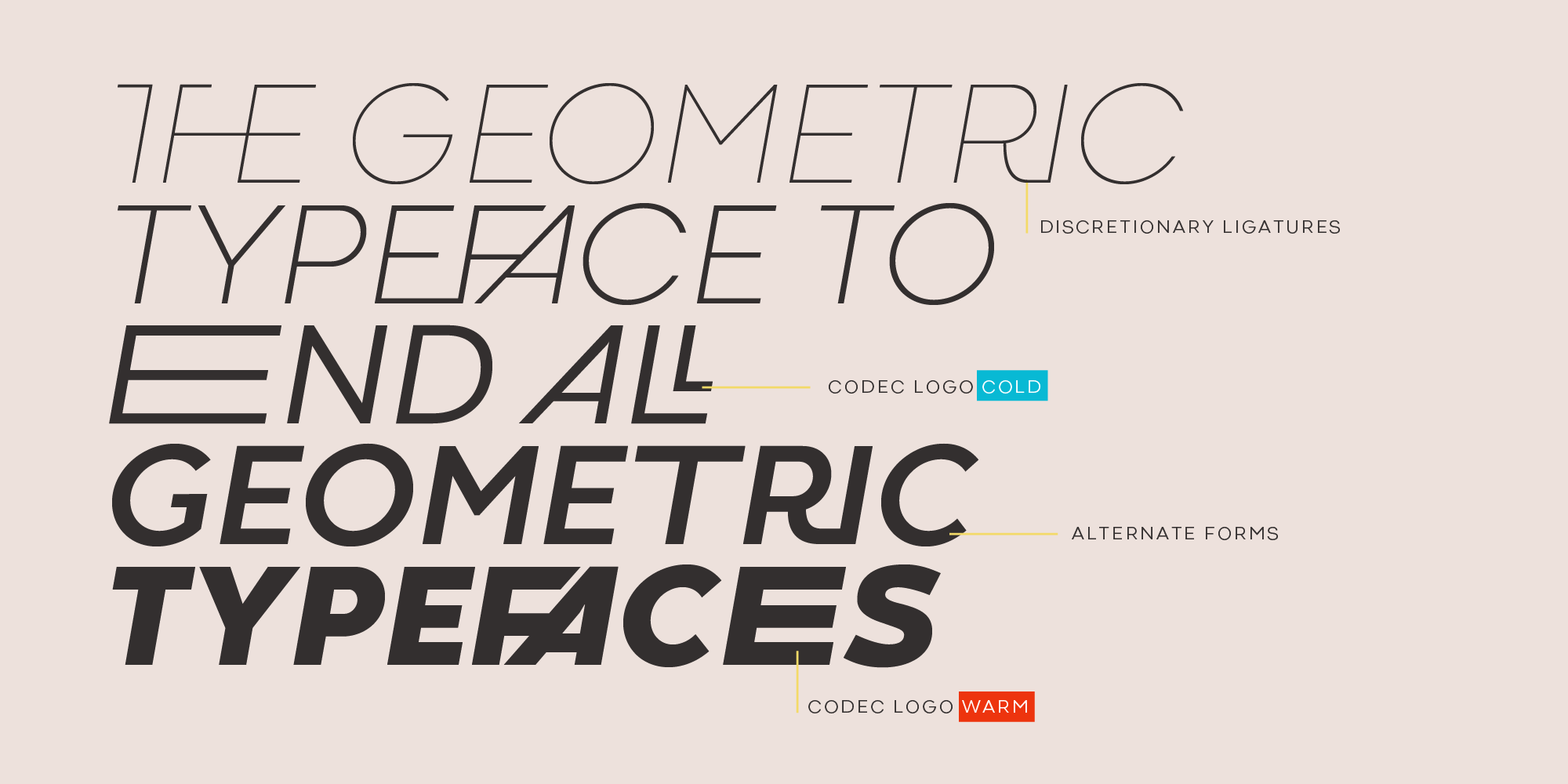
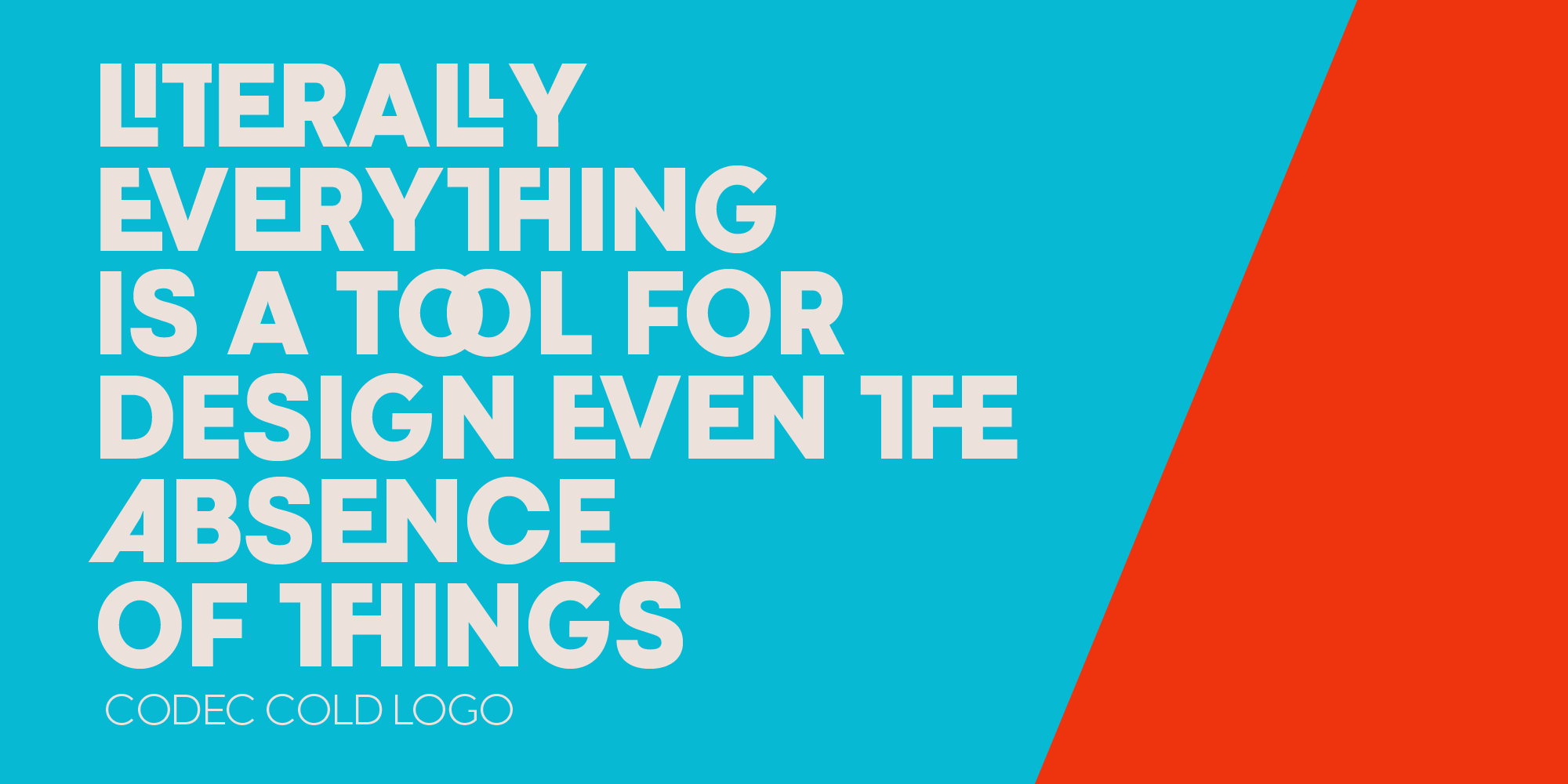
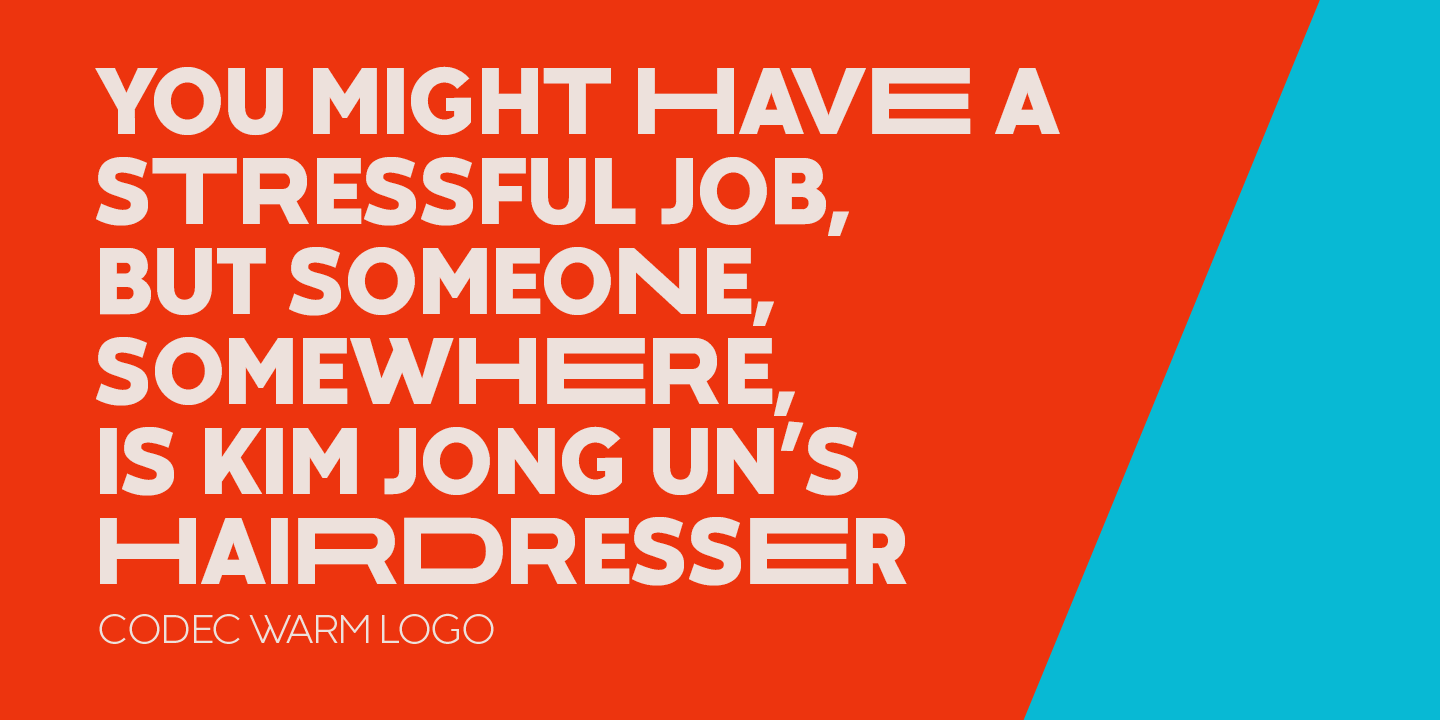
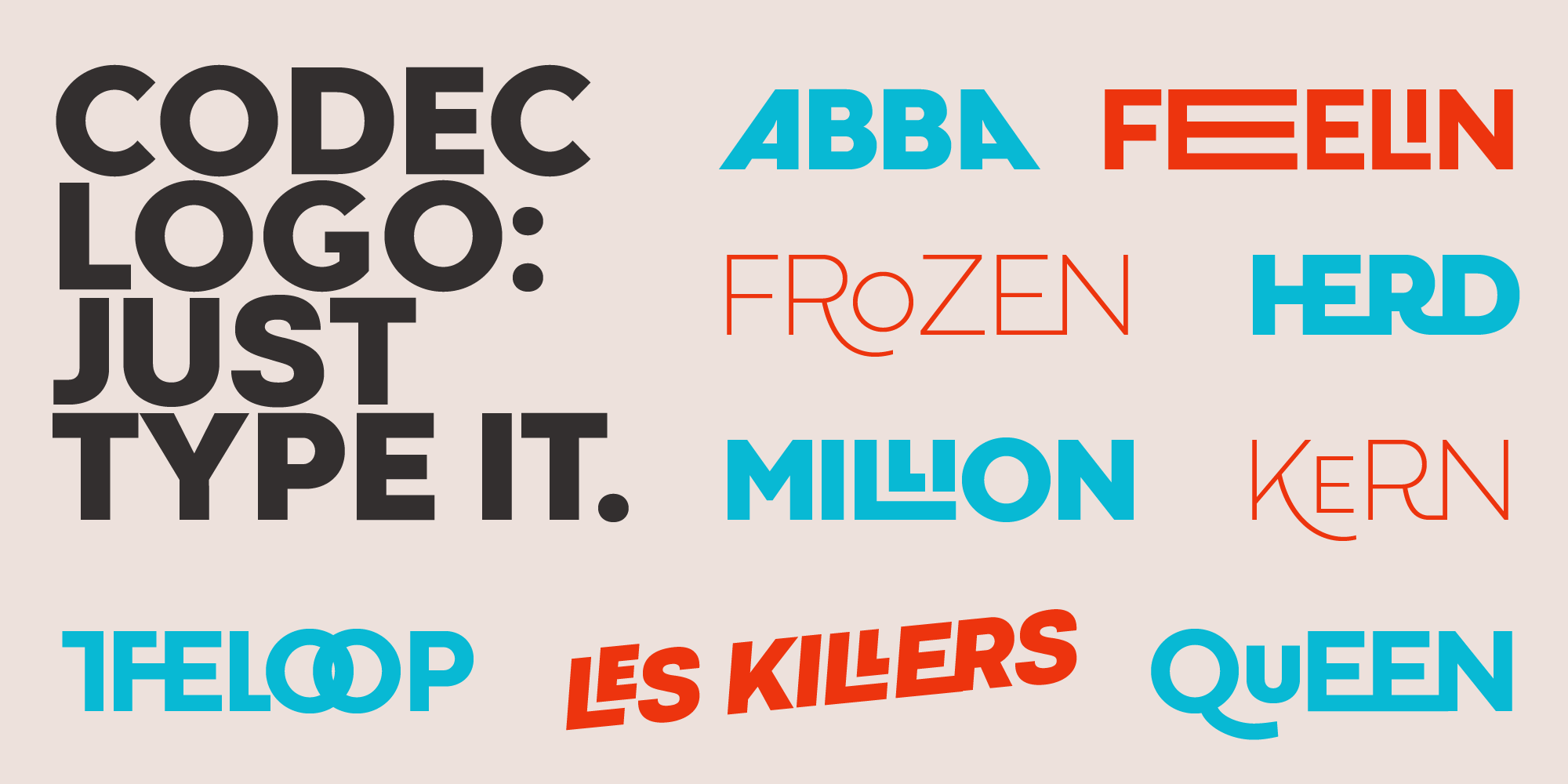
Codec typefaces also include over a hundred variant ligature and alternate glyphs. These glyphs, usually avalaible as discretionary ligatures, have been made permanently active in two subfamilies of Codec Logo, created for display use and logo design, and thus avalaible ina different set of weights. Codec Logo Cold makes the cold geometry alive with funky ligatures, while Codec Logo Warm randomly stretches characters: both allow for quick, unexpected solutions in logo design and display type treatment.
European languages
The European languages are members of the same family. Their separate existence is a myth. For science, music, sport, etc, Europe uses the same vocabulary.
The languages only differ in their grammar, their pronunciation and their most common words. Everyone realizes why a new common language would be desirable: one could refuse to pay expensive translators. To achieve this, it would be necessary to have uniform grammar, pronunciation and more common words. If several languages coalesce, the grammar of the resulting language is more simple and regular than that of the individual languages. The new common language will be more simple and regular than the existing European languages. It will be as simple as Occidental; in fact, it will be Occidental. To an English person, it will seem like simplified English, as a skeptical Cambridge friend of mine told me what Occidental is. The European languages are members of the same family. Their separate existence is a myth. For science, music, sport, etc, Europe uses the same vocabulary. The languages only differ in their grammar, their pronunciation and their most common words. Everyone realizes why a new common language would be desirable: one could refuse to pay expensive translators. To achieve this, it would be necessary to have uniform grammar, pronunciation and more common words. If several languages coalesce, the grammar of the resulting language is more simple and regular than that of the individual languages. The new common language will be more simple and regular than the existing European languages. It will be as simple as Occidental; in fact, it will be Occidental. To an English person, it will seem like simplified English, as a skeptical Cambridge friend of mine told me what Occidental is. The European languages are members of the same family. Their separate existence is a myth. For science, music, sport, etc, Europe uses the same vocabulary.
Loading...